Where is the clutch master cylinder located?

Where is the clutch master cylinder located?
As the core control component of the hydraulic clutch system, the physical location of the clutch master cylinder is directly related to the driver's control experience. It is usually installed at the end of the clutch pedal, fixed to the pedal bracket by bolts, and the push rod is mechanically linked to the pedal. This design ensures that the driver's pedaling action can be instantly converted into a hydraulic signal, thereby controlling the separation and engagement of the clutch. KOMP, a leading Chinese clutch and brake pump manufacturer, specializes in the development of high quality clutch master cylinder solutions that ensure long-term reliability and precise control.
clutch master cylinder manufacturer
1. Positioning and Structural Design
Precise position: The master cylinder is close to the rear of the clutch pedal. Some models need to disassemble the trim panel or battery bracket under the instrument panel to observe it.

Connection relationship: It is connected to the clutch slave cylinder (located in the gearbox housing) through a high-pressure oil pipe to form a closed-loop hydraulic system.

Error-proof design: The master cylinder piston has a built-in limit screw to prevent rotation, and the oil inlet valve ensures stable flow of oil by balancing the pressure difference.

2. Working Principle and Hydraulic Transmission
When the driver steps on the pedal:

The pedal pushes the master pump push rod, the piston moves left to close the oil inlet valve, and the oil chamber pressure increases;

The high-pressure oil is transmitted to the slave pump through the oil pipe, pushing the release bearing to disengage the clutch;

After releasing the pedal, the piston resets under the action of the return spring, and the oil flows back to the oil reservoir.

In this process, the pumping oil volume of the master pump directly affects the push rod stroke of the slave pump. The piston thickness and cavity volume of different models need to be accurately matched. Choosing a reliable wholesale clutch master cylinder ensures that these precise specifications are met for optimal performance.

3. Maintenance and Fault Response
Replacement cycle: It is recommended to check every 2 years or 60,000 kilometers. If there is oil leakage or abnormal pedal rebound, it needs to be replaced immediately.

Operation points:

When disassembling, the oil pipe and pedal push rod must be disconnected first, and attention should be paid to protecting the seals;

After installing the new pump, the hydraulic system air must be emptied to avoid "half-linkage" failure.

4. Common Problems and Optimization Suggestions
Risk of oil leakage: The main reason is the aging of the oil seal after long-term use. It is more common in Focus and other models after 100,000 kilometers;

Performance optimization: Upgrading to a new master cylinder (such as a thickened piston design) can reduce the pedal force;

DIY tips: Non-professionals are advised to avoid self-disassembly and assembly, as the screws in the dashboard are difficult to operate.

Considering the clutch master cylinder price is also essential when choosing between repair and replacement. KOMP offers cost-effective options without compromising quality, making it a trusted partner for both automotive professionals and distributors.

A Comprehensive Analysis of the Production Process of Track Roller Professional Manufacturing Creates Outstanding Performance

In the vast system of construction machinery, the track roller is a crucial 'foundation stone' beneath the wheels. As a core component of tracked machinery like excavators and bulldozers, it not only supports the weight of the machinery but also transmits driving force under complex conditions, while enduring various impacts and frictions from the ground. The performance of the track roller is vital for the efficient operation and long-lasting life of construction machinery. Today, we will delve into the manufacturing process behind the scenes, detailing how the production process of the track roller transforms raw materials into a reliable 'companion' of construction machinery.


ITR TRACK ROLLER


1. Material selection: laying the foundation for excellent performance


The selection of materials is the first step in the production of track rollers, which directly determines their final performance and service life. In the field of construction machinery parts manufacturing, the commonly used materials of track rollers mainly include alloy structural steel, such as 50Mn, 40Cr, etc.


• 50Mn steel yield strength is more than 645MPa, tensile strength is more than 835MPa, with good strength and wear resistance, suitable for use in medium load and wear environment;


• 40Cr steel after tempering treatment yields a strength is more than 785MPa, tensile strength is more than 980MPa, excellent comprehensive mechanical properties, suitable for bearing large loads and complex stress conditions;


When selecting materials, it is essential to consider not only the material's inherent properties but also the specific application scenarios and operational requirements of the track roller. This ensures that the chosen materials meet the demands for strength, wear resistance, and corrosion resistance. Additionally, the quality inspection of raw materials is crucial, including chemical composition analysis and mechanical performance testing. Only materials that meet the standards can proceed to the subsequent production stages.


2. Casting or forging: shaping the prototype of the Track Roller

According to the structure and performance requirements of the track roller,the  casting or forging process can be used to manufacture the blank.


(1) Casting process

For the complex structure of the track roller body, the casting process is usually used. The common casting methods are sand casting and metal casting: (among which, sand casting is divided into artificial sand casting and mechanical sand casting)


• The melting temperature of sand casting is controlled at 1550-1600℃ (carbon steel material), the pouring speed is 5-8kg/s, and the cooling time is set to 4-8 hours according to the size of the workpiece, to ensure that the internal structure of the blank is uniform and there are no obvious defects such as pores and cracks on the surface of the product;


• Metal casting is preheated to 200-300℃ through the mold, which improves the size accuracy of the blank and reduces the surface roughness. The production efficiency is more than 30% higher than that of sand casting.


• Compared with artificial sand casting, mechanical sand casting is more efficient, and the residual sand on the surface of the products after mechanical sand casting is easier to remove; the beauty of the product will also be improved.


(2) Forging process


Forging is a better choice for the track roller shaft that can withstand high load:


• In the process of die forging, the blank is heated to 1150-1200℃ and formed under a press of 8000-10000 tons. The size accuracy of the blank can reach ±0.5mm and the performance can be improved by 20%.


3. Mechanical finishing: give the product a precise size and good performance


After the rough manufacturing is completed, mechanical finishing is required to achieve the dimensional accuracy and surface quality required by the design.


(1) Rough processing


Turning machines, milling machines, and other equipment are used to remove the allowance on the surface of the blank. The allowance for rough machining of the outer circle of the wheel body is 3-5mm, the allowance for the inner hole is 2-3mm, and the allowance for the end face is 1-2mm to ensure the stability of the reference for subsequent finishing.


(2) High-temperature cleaning


• The outer circle of the wheel is cleaned by high-temperature cleaning equipment to wash away the residues left on the surface after rough processing.


• The length of high-temperature cleaning depends on the material, mass, and weight of the track roller.


(3)Modulation processing


• Other manufacturers' roller modulation process is half of the wheel body separately modulation; while our company strictly adopts the whole track roller overall modulation treatment, which makes the track roller always maintain a high level of concentricity value, and thus increases the durability and service life of the product.


• For different products, select different modulation equipment to make the product finish strictly meet the requirements (standard: the surface finish of the track roller is below 3.2).


4. Heat treatment: the key process to improve performance


(1) Annealing and normalizing


The casting blank is annealed at 550-650℃ (holding for 4-6 hours) to eliminate internal stress, reduce the hardness to 180- 220HB, and improve the machining performance; the forging blank is normalized at 900-950℃ (holding for 2-3 hours) to increase the hardness to 220-250HB.


(2) quenching and tempering


• Quenching process heats the parts to 850-880℃ (40Cr steel), keeps it for 1-1.5 hours, and then uses oil cooling or water cooling to cool quickly, so that the surface hardness reaches HRC50-55;


• After quenching, it needs to be tempered at 200℃ for 2 hours to eliminate internal stress and control the final hardness at HRC45-60.


5. Surface treatment: enhance corrosion resistance and wear resistance


Common surface treatment methods and technical parameters:


• Surface quenching: Induction heating temperature 850-900℃, hardened layer depth 2-3mm, surface hardness HRC55-60, suitable for key stressed parts of shaft components.


6. Quality testing: control the product quality throughout the whole process


(1) Raw material testing


• Chemical composition analysis: using a direct reading spectrometer, the detection accuracy reaches 0.01% (such as carbon content detection error ≤±0.005%).


(2) Process detection


• The casting blank must be free of cracks, and burrs and flash must be completely removed. The surface roughness of the product must meet the standard data requirements. In the machining area, defects such as pores, sand holes, and slag must not exceed 1mm in size; for machining areas with a thickness of less than 1mm, the number of defects on one side must be no more than 5 (not concentrated).


• After heat treatment, the Rockwell hardness meter (HRC scale) is used to detect, the sampling rate of each batch is greater than or equal to 5%, and the hardness fluctuation range is less than or equal to ±2HRC.


• Our advantages: In the production of track rollers, after conventional heat treatment, the surface hardness layer of the track rollers will reach 3-4, 4-5, 5-6mm, depending on the machine model. However, ordinary manufacturers only have a thin layer of hardness of about 2mm on the surface, which is more wear-resistant.


Summary: Professional technology to achieve reliable quality


From material selection to quality inspection, every link embodies the professional wisdom and exquisite technology of mechanical manufacturing. The production process of the track roller is complex and rigorous, and each step has an important impact on the performance and quality of finished products.


In the field of construction machinery parts manufacturing, quality control and continuous improvement are the key to the survival and development of enterprises. We always adhere to the strict control of every production link, constantly optimize the process parameters, improve the level of production technology, and devote ourselves to providing customers with high-quality track roller products.


If you have any questions or need information about the production process of the track roller or our products, please feel free to contact us (binochen@yintparts.com) at any time. We will provide you with satisfactory solutions with professional knowledge and quality service. Follow us for more professional knowledge of construction machinery parts manufacturing!

Precision-Built Idlers for Extreme Conditions

At XIAMEN YINTAI MACHINERY, we engineer excavator and bulldozer idlers to outperform in the harshest environments. While others compromise, we implement Japanese-grade manufacturing discipline that global OEMs trust.


ITR idler for bulldozer


Material Superiority


Raw Steel Selection:

* Standard models: Premium 35MnBh alloy

* Heavy-duty models: OEM-grade 33Mn4 (identical to top-tier brands)


Critical Components:

* High-performance copper bushings

* Industrial-grade sealing systems


Unmatched Process Integrity


1. Complete Thermal Cycling

* Unlike typical manufacturers who skip steps:

* Weld repair → Full re-quenching → Precision grinding → Final heat treatment

* Mandatory tempering within 2-hour critical window


2. Depth Advantage

* 7-8mm hardening depth (2-3× deeper than industry standard 3mm)

*  "Hard shell-tough core" gradient structure


3. Japanese Precision


* Mazark CNC machining (imported)

* 100% non-destructive testing


Why It Matters


Competitors' shortcuts lead to:


* Premature wear in mining conditions

* Stress fractures from inadequate tempering

* Seal failures from inferior materials


Our idlers deliver 40%+ longer service life because we refuse to cut corners—where others see cost, we see durability.


How to Choose the Right Paint Booth for Your Application

How to Choose the Right Paint Booth for Your Application


Choosing the right paint booth is essential for achieving high-quality finishes, improving productivity, and ensuring a safe and clean working environment. Whether you're an auto body shop, a 4S repair center, or an industrial equipment manufacturer, this guide will help you understand the different types of spray booths available and how to select the one that best suits your needs.


1. What Is a Paint Booth?

– Basic Function

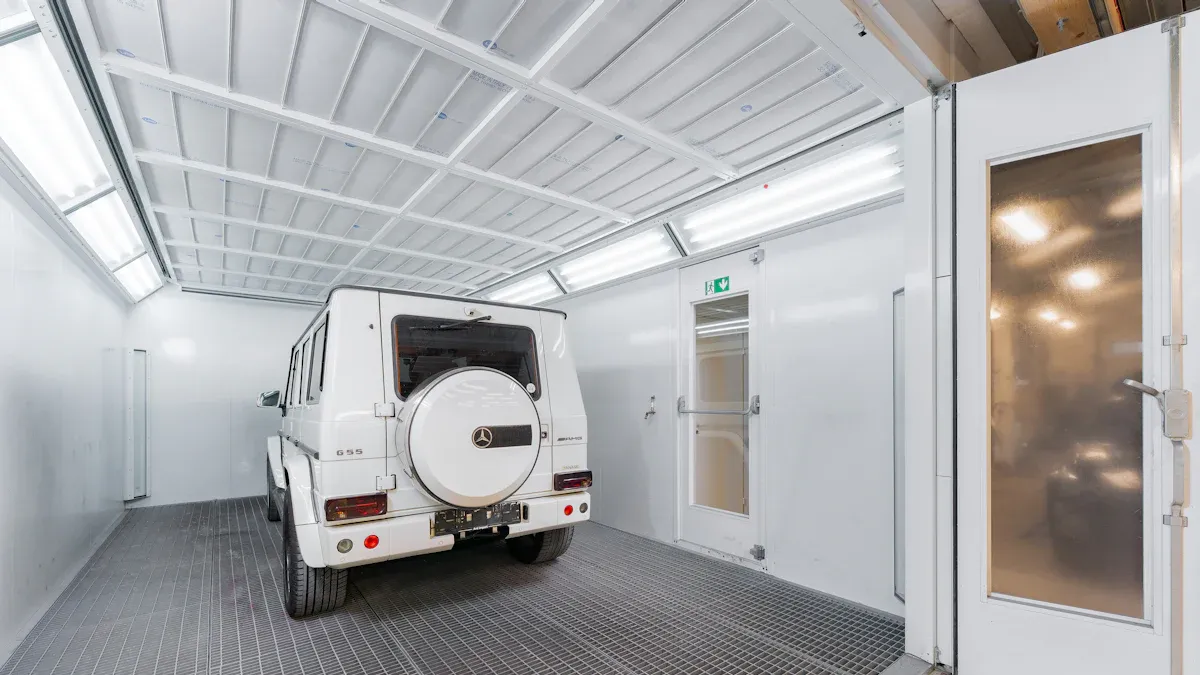
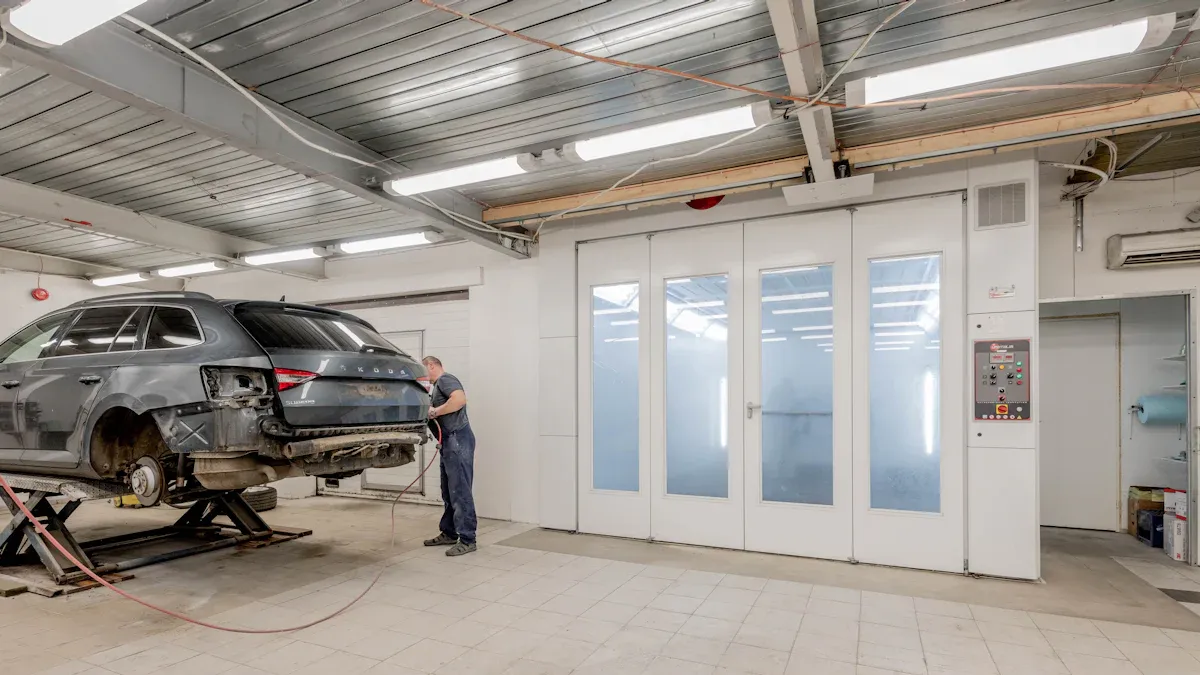
A paint booth is an enclosed, controlled environment designed to apply coatings (such as paint, primer, or clear coat) to vehicles or parts. It ensures a clean space that isolates dust, contaminants, and overspray from the painted surface.

– Main Components

Booth Walls & Doors: Usually made of insulated panels or galvanized steel for durability and thermal control.

Exhaust System: Extracts paint fumes and airborne particles safely from the work area.

Filters: Pre-filters, ceiling filters, and exhaust filters trap dust and overspray for a cleaner job and safer air.

Lighting: Bright, shadow-free lighting ensures visibility for precise coating application.


2. Why Do You Need a Paint Booth?

– Improve Painting Quality

The controlled environment minimizes contamination and ensures uniform coating application. Temperature and airflow control lead to better finish results.

– Worker Safety & Environmental Compliance

A spray booth reduces exposure to hazardous fumes and helps meet EPA and OSHA regulations. This is essential for protecting workers and avoiding fines.

– Dust and Overspray Control

Proper filtration and airflow systems capture overspray and dust, keeping the work area clean and safe.


3. Types of Paint Booths and Their Applications

– Downdraft Paint Booth

Air flows vertically from ceiling to floor. Best for high-end automotive refinishing.

✅ Best for: Premium car painting, luxury vehicles, production lines.

– Crossdraft Paint Booth

Air enters from the front and exits through the rear. Lower cost and easy installation.

✅ Best for: General auto repair shops, budget-conscious buyers.

– Side Draft Paint Booth

Air flows from ceiling side panels downward to exhaust on the opposite walls. Offers cleaner airflow than crossdraft.

✅ Best for: Medium to high-end refinishing projects.

– Open Face Booth

Three-sided booth with open front. No heated airflow but includes exhaust and filtration.

✅ Best for: Prep stations, parts painting.


4. Key Factors to Consider Before Buying

– Size and Space Requirements

Ensure the booth fits your largest vehicles or parts while allowing room for safe operation. Measure your shop space before choosing.

– Airflow Type

Choose between downdraft, crossdraft, or side draft depending on your finish quality expectations and budget.

– Filtration System

Look for multi-stage filtration with high-efficiency filters. Guangli booths use EU5 or higher-grade filters to ensure compliance and performance.

– Heating Options

Heated booths reduce drying time and improve finish curing. Guangli offers diesel, gas, and electric heating systems.


5. FAQs About Paint Booth Selection

– What is the difference between downdraft and crossdraft booths?

Downdraft booths direct air from top to bottom, creating the cleanest environment. Crossdraft booths are more economical and easier to install but may allow more contaminants.

– How often should filters be replaced?

Depending on usage, filters should be checked monthly and replaced every 2–3 months for optimal performance.

– Can paint booths be customized?

Yes. Guangli offers customized booth sizes, airflow configurations, and heating systems to match your specific application needs.


6. Recommended Paint Booths from Guangli

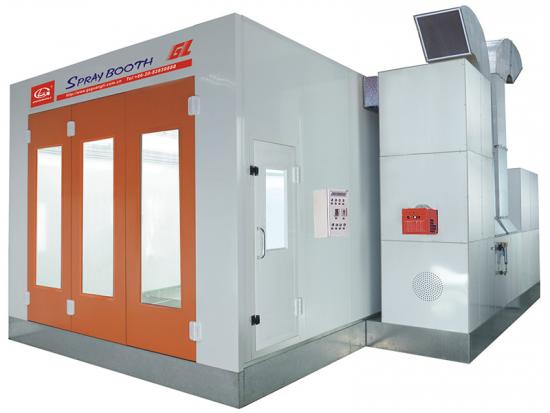
–Model A: GL2000-A1 – Compact Downdraft Booth

Internal Size: 7000×4000×2700 mm

Airflow: Full downdraft

Heating: Diesel or gas burner (optional electric)

Air Volume: 24,000 m³/h

Lighting: LED, 1000 lux

Best for: Auto repair shops and 4S centers needing premium finishes

Productlinks: https://www.gzguangli.com/custom-downdraft-automotive-spray-paint-booth-australia-for-sale_p56.html


Downdraft Automotive Spray Paint Booth

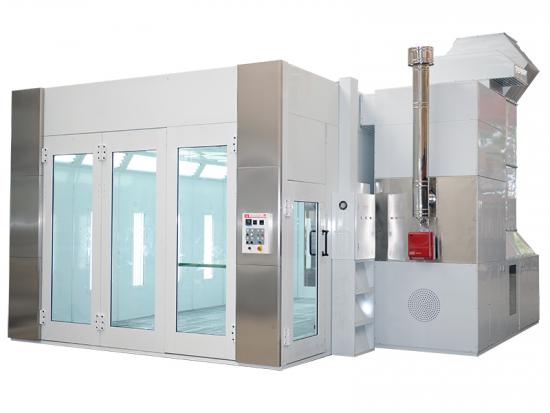
–Model B: GL10 – Heated Pit Trench Exhaust Bus Truck Paint Booth

Internal Size: 15000×5000×4400 mm

Air Volume: 64,000 m³/h

Heating: diesel burner

Structure: Double-layer panels with rock wool insulation

Best for: Bus, Truck and other industrial Painting

Productlinks: https://www.gzguangli.com/custom-large-equipment-booth-and-truck-spray-paint-booth-for-sale_p83.html

Large Equipment Booth And Truck Spray Paint Booth

All Guangli paint booths are CE-certified and built with durable galvanized steel structures, EU-grade filtration systems, and intelligent control panels.


7. Conclusion

Choosing the right spray booth involves understanding your application, space limitations, finish quality requirements, and safety standards. With decades of manufacturing experience, Guangli offers a full range of paint booth solutions that meet international standards and deliver reliable, high-performance results.


✅ Ready to Upgrade Your Paint Facility?

–Contact us today to speak with a spray booth expert

Contact person: Sunnie Liao

Email: sunnie@gzguangli.com.cn

WhatsApp: +8613925061383

–Request a free quote or download our catalog

–Explore more models at www.gzguangli.com

Truck & Large Equipment Spray Paint Booths

Big Jobs Need Big Solutions – At Guangli, we specialize in designing and manufacturing large-scale spray booths tailored for trucks, buses, and heavy-duty equipment. From airflow options to air makeup units, heating and curing systems, we provide customizable solutions to fit your space, workflow, and climate.


We can custom design a solution based on our standard models or from scratch if you have specialized requirements. Guangli offers a full range of spray booths to meet any need. See our products page for details: www.gzguangli.com

Large Equipment Spray Paint Booths

Truck Paint Booth Manufacturing Experts

As trusted truck spray booth manufacturers, Guangli has worked with leading names in the automotive and transportation industry. Our large equipment spray booths are engineered for indoor and outdoor use, with designs that save building space while offering maximum versatility and durability. We manufacture and design our products in-house, ensuring top quality while remaining competitive.


Outdoor Truck Booths

For businesses needing outdoor spray booths, especially in space-limited workshops, Guangli offers custom-built exterior truck booths designed to withstand tough weather conditions. We engineer the booth based on your geographical location and take into consideration any and all aspects of the specific environment. Insulating the ridged panel goes a long way in helping keep your industrial light fixtures operational in extreme conditions. It also helps eliminate the infiltration of insects, pests, and even snow and other strong weather. View the visual demonstration videos below to see exactly where it’s at on your truck paint booth.

Truck Spray Paint Booths

How does the clutch master cylinder work?

How does the clutch master cylinder work?
Working principle of hydraulic transmission system
As the power source of hydraulic clutch systems, the clutch master cylinder plays a vital role in ensuring smooth gear transitions.

The clutch master cylinder operates through three distinct working stages:
1. Pressure building stage
When the pedal is pressed, the push rod activates the main piston, compressing the hydraulic oil. At this point, the compensation hole closes, and system pressure increases linearly (0.7–1.2 MPa pressure is generated per millimeter of stroke). Many factory clutch master cylinder configurations now adopt a progressive pressure curve, enabling smoother initial pressure buildup to enhance driving comfort.
clutch main cylinder
2. Pressure transmission stage
The pressurized hydraulic oil travels to the clutch slave cylinder via reinforced nylon pipelines (typically 4.5–6mm in diameter). Transmission efficiency depends on:

Oil viscosity (DOT4 standard: ≤1800 mm²/s at -40°C)
Pipeline routing (bending radius > 5× pipe diameter)
System air removal (air pockets may cause up to 30% pressure loss)
Leading supplier clutch master cylinder manufacturers often test these parameters rigorously to ensure consistent quality across various vehicle platforms.

3. Pressure release stage
When the pedal is released, the return spring resets the piston, and the compensation hole reopens to stabilize the pressure. High-performance models might include a rapid oil return valve, reducing reset time to under 0.2 seconds.

Typical failure modes
Progressive failure – Worn seals cause slow pressure buildup (symptom: increased pedal travel)
Sudden failure – Cracks in the master cylinder lead to hydraulic leakage (ensure surface hardness ≥ HB80)
Temperature sensitivity – High temperatures may vaporize the fluid, softening pedal response

For models like the Ford Fiesta clutch master cylinder, it’s essential to select high-quality components from trusted suppliers to avoid premature failure.

Maintenance practice guide
Preventive maintenance:
Replace hydraulic oil every 2 years or 40,000 km
Check pedal free travel regularly (target: 10–15mm)
Use specialized tools (e.g., BET-300) for system bleeding
Modification precautions
Competition modifications require upgrading the sub-pump’s pressure tolerance
Quick-displacement kits must align with the clutch master cylinder’s oil delivery rate
Do not mix hydraulic oils of different specifications

Fault diagnosis process
A[Abnormal pedal] --> B{Pressure test}
B -->|Insufficient pressure| C[Check sealing system]
B -->|Normal pressure| D[Check mechanical connection]
C --> E[Replace maintenance kit]
D --> F[Adjust connecting rod mechanism]

What Are the Components of a Brake Master Cylinder?

What Are the Components of a Brake Master Cylinder?


The brake master cylinder is a critical part of any vehicle’s hydraulic brake system. It plays a key role in transforming the mechanical force from the brake pedal into hydraulic pressure, which ultimately activates the brake calipers or wheel cylinders. To understand how it functions effectively, it's important to look at the individual components that make up a brake master cylinder.
brake cylinder price

Here are the main parts that form a typical brake master cylinder:

Fluid Reservoir – Stores the brake fluid that supplies the master cylinder.


Reservoir Cover – This seals the top of the fluid reservoir, preventing contamination and fluid evaporation.

Filter Net – Positioned under the cover, it keeps dirt and debris from entering the hydraulic system.

Positioning Screw – Ensures precise alignment of internal parts during operation.

Rubber and Gasket – These components prevent leakage and maintain airtight seals within the cylinder.

Catch Bolt – Holds parts of the master cylinder assembly securely in place.

Piston and Spring 1 & 2 – Two piston-spring assemblies allow for dual-circuit operation, providing increased safety in the event of one circuit failing.

Retainer Ring – Keeps internal parts secured inside the cylinder bore.

Anti-Dust Cover – Protects the internal mechanism from dust and debris, extending the service life of the unit.

Each part plays a crucial role in ensuring smooth and responsive braking. A high-quality brake master pump relies on the precise engineering of these components to deliver safe, consistent braking performance.

When choosing a brake master cylinder supplier, quality should always be the top priority. KOMP is a trusted manufacturer specializing in the production of brake master cylinders, brake slave cylinders, clutch master cylinders, and clutch slave cylinders. With a reputation built on precision and durability, KOMP ensures every component meets high-performance standards.

For buyers seeking both reliability and value, KOMP offers factory price brake master cylinder that balance affordability with professional-grade quality. This makes them a preferred choice for automotive professionals, wholesalers, and repair shops around the world.

What is the function of the clutch slave cylinder?

What is the function of the clutch slave cylinder?
Although the clutch slave cylinder is small, it is an indispensable "hydraulic executive" for manual transmission cars. It silently assumes the role of a bridge between power transmission and interruption. Once it fails, the gear shifting will be frustrating at best, and the vehicle will break down at worst. This article will use popular language to analyze its working principle, core functions, and common faults to help you understand this "behind-the-scenes hero".
China clutch slave cylinder
1. "Switch" of Power Transmission
Separation: When the driver steps on the clutch pedal, the master pump pushes the slave pump piston through hydraulic oil, and the piston drives the release bearing to press against the pressure plate spring, so that the friction plate is separated from the flywheel and the engine power is cut off (the gear can be shifted smoothly at this time).

Engagement: After releasing the pedal, the hydraulic pressure disappears, the pressure plate re-clamps the friction plate, and the power is restored. A high-quality factory clutch slave cylinder ensures this process runs reliably every time.

2. "Amplifier" of Operating Force
The hydraulic system amplifies the pedal force through the cylinder diameter difference between the main pump and the slave pump (usually the slave pump has a larger diameter), so that the driver only needs to step lightly to complete the clutch operation, avoiding the laborious problem of traditional mechanical levers. This mechanical ease is largely thanks to the hydraulic clutch slave cylinder, which offers both sensitivity and durability.

3. Working Principle: Exquisite Cooperation of Hydraulic Transmission
Step on the pedal: the master cylinder compresses the hydraulic oil → the oil pipe transmits pressure → the piston of the slave cylinder extends → pushes the release fork and bearing;
Shifting stage: the pressure plate is separated from the flywheel, the input shaft of the transmission stops, and the impact-free shifting is achieved;
Release the pedal: the spring in the slave cylinder resets, the hydraulic oil flows back, and the pressure plate re-presses the friction plate.

Whether you are replacing a single unit or sourcing from a wholesale clutch slave cylinder supplier, understanding how this component works can help ensure the correct part is chosen.

4. Fault Warning: Typical Manifestations of Slave Cylinder Abnormality
Incomplete separation: difficult shifting, gearbox gear slapping (slave cylinder oil leakage or piston jamming leads to insufficient pressure);
Clutch slippage: weak acceleration, increased fuel consumption (slave cylinder return is poor, the pressure plate is not fully engaged);
Soft pedal: hydraulic system air intake or oil leakage, need to be emptied or replaced in time

5. Maintenance Tips
Check the hydraulic oil regularly: replace/replenish the oil in time when it is turbid or insufficient;
Beware of oil stains: oil stains on the housing of the slave pump may indicate aging of the seal ring;
Operation habits: avoid pressing the clutch for a long time in the semi-clutch state to reduce the load on the slave pump.

The clutch slave cylinder is like a precise "mediator", coordinating the "separation and combination" of the engine and the transmission. Understanding its role can not only help car owners troubleshoot faults in time but also improve the overall understanding of the vehicle's transmission system. If your car has abnormal shifting, you may wish to check this hidden but critical component first—especially if considering a factory clutch slave cylinder upgrade or sourcing a hydraulic clutch slave cylinder replacement for optimal performance.

Automechanika Frankfurt concludes successfully new energy vehicle and Chinese e-car industry is highlight.

Recently, Automechanika Frankfurt which attracts the attention of the global automotive industry was came to a successful end at the Frankfurt Exhibition Centre in Germany. The exhibition not only gathered 4,200 to 4,500 exhibitors from more than 80 countries, but also attracted the attention of a large number of industry experts and media to discuss the future development trend of the automotive industry. Especially notable is that Chinese e-car became the key words of this exhibition, showing the rapid development and innovation of new energy vehicle technology in the world and its impact on the global market are currently the most discussed topics in the automotive industry and the economy as a whole. Chinese suppliers such as GEELY, BYD, AVATR, HONGQI, & DSFK was attended.


In just 20 years, China has electrified a significant proportion of its transportation and established a powerful NEV (New Energy Vehicle) industry. Currently six out of ten electric cars produced globally are manufactured in China.  By implementing pilot projects, purchase incentive programmes and subsidies, China has managed to establish itself as a global leader in electric mobility while also fostering the growth of value chains in the battery market. In addition to reducing emissions, its objective was also to reduce dependency on oil imports. Furthermore, the electricity used in electric cars will also become green, with the goals set as part of a five-year plan for renewable energies in 2022 gradually being introduced. By 2025, the proportion of renewable energy used is set to rise to 33 per cent. Every second dollar invested in renewable energies worldwide is invested in China.

China Electric Automotive Cars Graphic

As one of the core technologies for new energy vehicles, the thermal management system for new energy vehicles also made a big splash at the exhibition. The system includes three major parts: air-conditioning thermal management system, motor and electronic control cooling system, and battery thermal management system, which is an important guarantee to ensure the driving safety, range and comfort of electric vehicles. During the exhibition, a number of exhibitors showcased advanced thermal management technologies, including integrated thermal management systems and intelligent thermal management control units. By optimising heat distribution and energy utilisation, these technologies not only improve the energy efficiency ratio of new energy vehicles, but also significantly reduce the vehicle's power consumption and increase its range.


Battery technology is the core of new energy vehicle development. At the exhibition, a number of companies showcased new battery materials, battery management systems (BMS) and fast charging technologies. These technologies not only improve the energy density and safety of the battery, but also greatly shorten the charging time and enhance the user experience.


Coolant pump as an important part of the battery thermal management system of new energy vehicles, its vital to maintaining the stable operation of key components such as motors and batteries. As the performance of new energy vehicles continues to improve, the requirements for electric coolant pumps are getting higher and higher, its not only has higher efficiency and more stable performance, but also incorporates intelligent control technology, which can automatically adjust the flow and temperature of the coolant according to the actual operating conditions of the vehicle, thus further enhancing the range and safety of new energy vehicles.


It is especially worth mentioning that several seminars and exchange activities on thermal management technology for new energy vehicles were held during the exhibition. Participating experts had an in-depth discussion on topics such as integration, intelligence and mass production of thermal management systems, and jointly looked forward to the future development prospects of thermal management technology for new energy vehicles. Participants agreed that with the continuous expansion of the new energy vehicle market and the continuous progress of technology, thermal management systems will develop in a more efficient, intelligent and environmentally friendly direction.


It is worth mentioning that at this Frankfurt Auto Parts Fair, Chinese enterprises also showed their strong strength and innovation ability. As an important partner of new energy vehicle OEMs , Thermo Technology has been widely noticed and praised for its latest coolant water pumps and thermal management system solutions for new energy vehicles.


With the continuous development of the global automotive industry and the increasing expansion of the new energy vehicle market, Automechanika Frankfurt as an important event for the global automotive industry, will continue to play an active role in promoting technological innovation and industrial exchanges. As key areas of new energy vehicle technology, new energy vehicle refrigerant pumps and new energy vehicle thermal management systems will play an increasingly important role in future development. We have reason to believe that in the near future, new energy vehicles will become the mainstream trend of the global automotive industry, bringing more convenient and environmentally friendly options for human travel.

Xiamen Van Seat Seat Launch - RIB Style Campervan Bench Seat Bed

Xiamen Van Seat Seat Launch - RIB Style Campervan Bench Seat Bed


Trifold Campervan Bench Seat Bed ——QZ-S221

  • Custom RIB Seat
  • Van Bench Seat for RIB
  • trifold RIB Seats for sale
  • New RIB Seat


1、Campervan Bench Seat Bed material

• Skeleton: Q235, Q440, Q590 steel, etc.

• Covering material: fabric

• Foam material: PUR cold foam


2、Campervan Bench Seat Bed Features

• Convert the campervan bench seat into a bed simply and easily;

• Has a large storage space, the bottom bracket can be sealed up with wooden boards to make a locker to store all your camping equipment;

• Equipped with an integrated harness and lsofix, adjustable headrest and tilting rear leaf.

QZ-S221 RIB Seat

3、Campervan Bench Seat Bed can be fitted with a child seat

RIB Seat with children's seat

4、Campervan Bench Seat Bed Style

• Single fold seat style

  • Single RIB Seat
  • Single Folding RIB Seat
  • Single RIB Bench Seat


• Twin fold seat style

  • wholesale rib seat
  • M1 RIB style seat
  • foldable rib seat


• Triple fold seat style

  • 3 seat RIB Seat
  • Folding RIB Seats
  • Folding rib bench seat for sale


5、Campervan Bench Seat Bed Size Chart

Campervan Bench Seat Bed Size

Bench Seat Bed Size

6、Campervan Bench Seat Bed Installation Hole Size

RIB Seat Bed Installation Hole Size

7、Demonstration of converting into a bed

Vedio


Step 1: Pull the handle to unlock and flip the seat forward;

Folding RIB seat

Step 2: Pull up on the lever to unlock the mechanism and flip the back downward;

folding rib bench seat

Step 3: Pull the handle unlocking mechanism to lower the back leaf plate.

rib style seat

8、Campervan Bench Seat Bed can be customized

♦ Size specification can be customized

♦ Armrest Options

– without

 – Single Side Armrest

– Double Side Armrests

♦ Wrap fabric

– Pvc

 – Fabric

– Oxford fabric

 – Headed Cowhide

      ♦ Mounting bracket options

         – with bracket

         – Without bracket


9、Campervan Bench Seat Bed Application Scenario

This trifold bench seat is generally applicable to campervan and RV remodeling, which is very popular in the United States, Canada, Germany, Australia and the United Kingdom.

  • high quality rib seat
  • 2 seat RIB Seat
  • M1 Triple RIB Seat


1. United States

The United States 2023 shows more than 13 million units (including trailers and self-propelled), which is the largest market for campervans in the world;

• America has a deep road culture and is popular for road trips;

• More than 28,000 campgrounds (including private and public campgrounds);

• American RV Industry Association says that about 10% of U.S. households own an RV or camper.

2. Canada

• Canada has a market of about 1.4 million RVs;

• Canada is sparsely populated and rich in natural landscapes for long-distance travel;

• Campgrounds over 4,000, including remote areas and popular scenic spots;

• Short summer, RV travel is concentrated in May-September.

3. Germany

• Germany market retains more than 1 million caravans (including trailers), which is the first market in Europe;

• Germany automobile industry is developed, self-propelled caravans (Motorhomes) are more popular;

• Germany has about 3,000 campgrounds with modern facilities;

• Germany has “Stellplatz” special parking area, allowing overnight stay in some public places.

4. Australia

• Australia has a market of about 750,000 motorhomes and campervans.

• Australia has a “Travel Around Australia” culture that encourages people to travel;

• Australia has more than 3,000 campsites, including free campsites;

• International tourists often rent motorhomes to explore remote areas (e.g. Uluru).

5. France

• France has over 500,000 motorhomes on the market.

• Popular European destination for self-drive tours, with 11,000 campsites (the most in Europe).

• Good facilities in coastal areas (e.g. Côte d'Azur) and mountainous areas (Alps).

6. United Kingdom

• The UK market has around 500,000 motorhomes.

• Trailer caravans are more common for family vacations.

• Campsites are found throughout the countryside and on the coast, with a cultural preference for “staycation”.