Water-based construction projects can pose significant challenges, requiring specialized equipment that can operate efficiently in aquatic environments. Two such innovative solutions are amphibious excavator floating pontoons and amphibious excavators. In this article, we will explore the capabilities and benefits of these machines, highlighting their role in transforming construction operations on water bodies.
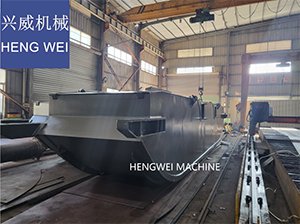
Pontoons for Versatile Water-based Operations:
Pontoons are floating platforms designed to support heavy equipment and facilitate various construction activities. These versatile structures provide stability and enable machines to access areas that are otherwise difficult to reach. With their modular design, pontoons can be configured to suit different project requirements, making them ideal for a wide range of applications, including bridge construction, dredging, and pipeline installation.
The Amphibious Excavator: Power and Mobility in Water and on Land:
Amphibious excavators are specifically designed to operate effectively both in water and on land. These innovative machines combine the capabilities of traditional excavators with improved mobility and flotation systems. Equipped with specialized tracks and pontoons, amphibious excavators can navigate through marshes, swamps, and shallow water bodies with ease, making them indispensable for projects such as wetland restoration, riverbank stabilization, and shoreline development.
Advantages of Pontoon and Amphibious Excavator Technology:
a) Increased Efficiency: The use of pontoons and amphibious excavators minimizes the need for additional equipment, as they can perform multiple tasks, reducing project timelines and costs.
b) Enhanced Safety: With superior stability and flotation capabilities, these machines provide a safer working environment, mitigating the risks associated with water-based construction.
c) Environmental Preservation: amphibious excavator pontoon and amphibious excavator technology minimizes damage to delicate ecosystems by allowing construction activities to take place without disrupting the natural habitat.
d) Accessibility: Both pontoons and amphibious excavators can access remote or challenging locations, enabling construction projects in areas that were previously inaccessible.
Successful Applications in Real-world Projects:
The use of amphibious excavator pontoon and amphibious excavator technology has yielded remarkable results in several water-based construction projects worldwide. Examples include the construction of bridges over large rivers, the excavation of canals and channels, and the restoration of wetlands. These machines have proven their effectiveness in overcoming geographical obstacles and improving overall project efficiency.
Future Developments and Customization:
As technology continues to advance, there is a constant drive to enhance the capabilities of pontoons and amphibious excavators. Manufacturers are investing in research and development to improve performance, durability, and adaptability. Customization options allow these machines to be tailored to specific project requirements, ensuring maximum efficiency and productivity.
Conclusion:
Pontoons and amphibious excavators have revolutionized water-based construction projects, providing a cost-effective and environmentally-friendly solution. These machines enable construction activities to be carried out efficiently in challenging aquatic environments, opening up new possibilities for infrastructure development, environmental restoration, and beyond. As technology progresses, we can expect further advancements in pontoon and amphibious excavator capabilities, paving the way for more efficient and sustainable water-based construction practices.