When sourcing excavator and bulldozer spare parts, buyers need more than a competitive quotation and attractive product photos. They also need reliable documents that prove the supplier can manufacture parts according to the agreed specifications and maintain consistent quality throughout production.
So, what documents should an excavator parts supplier provide for quality verification? At a minimum, buyers should request relevant company certifications, material certificates, dimensional inspection reports, hardness test reports, production quality records, and final inspection documents. Depending on the product and order requirements, heat treatment records, welding inspection reports, and packaging records may also be necessary.
For distributors, equipment maintenance companies, and construction machinery parts importers, these documents help answer an important question: can the supplier consistently deliver excavator parts that meet the required technical and quality standards? This guide explains which documents to request, what information they should contain, and how to evaluate them before approving an order.
Why Quality Verification Documents Matter When Buying Excavator Parts
Excavator undercarriage components operate under heavy loads, repeated impact, friction, and abrasive working conditions. Parts such as track rollers, track chains, sprockets, front idlers, and track shoes must meet specific material, dimensional, and mechanical requirements to perform reliably.
A component may look correct during a visual inspection but still have problems that are difficult to identify without supporting quality records. For example, incorrect steel composition may affect strength, inadequate heat treatment may reduce wear resistance, and dimensional deviations may cause installation difficulties.
Quality verification documents provide evidence of how materials were selected, how components were manufactured, and whether the finished products meet the agreed requirements. They also help buyers compare suppliers using measurable information instead of relying only on marketing descriptions.
For bulk orders, these records are particularly important because the quality of one sample does not automatically represent every product in the production batch. A reliable supplier should have a defined inspection process and be able to explain how inspection results are recorded and managed.
Company Certifications and Quality Management System Documents
The first documents buyers should review are the supplier's company certifications and quality management system information. These documents help establish whether the manufacturer has a formal system for controlling purchasing, production, inspection, and other business processes.

Common documents to request include:
- ISO 9001 certificate: Shows that the organization has a certified quality management system within the stated certification scope.
- Company registration documents: Help verify the supplier's legal business identity and registered company information.
- Factory and manufacturing information: Helps buyers understand whether the supplier operates manufacturing facilities or relies on external production partners.
- Quality management procedures: Explain how the company controls incoming materials, production processes, nonconforming products, and final inspections.
- Relevant product or industry certifications: Should be requested when required by the product specification, destination market, or purchase contract.
Yintparts, operated by Xiamen Yintai Machinery Co., Ltd., presents its ISO 9001-related certification information and manufacturing facilities on its website. The company describes quality management practices covering raw material purchasing, research and development, design, manufacturing, and final packaging.
Buyers can review the Yintparts ISO 9001 certificate information and company background when evaluating its quality management approach. When requesting a certificate, buyers should also check the issuing certification body, certificate number, validity period, and certified business scope.
One important point: ISO 9001 certification demonstrates a quality management system, not automatic certification of every individual excavator part. Product conformity still needs to be verified through the applicable technical specifications and inspection records.
Material Certificates for Steel and Other Raw Materials
Material certificates are important when purchasing components made from alloy steel, carbon steel, or other specified engineering materials. They provide information about the material used in production and help buyers confirm whether it matches the agreed requirements.
For example, excavator track shoes, track links, sprockets, and rollers may use different steel grades depending on their design and working conditions. The selected material influences mechanical properties, strength, toughness, and wear resistance.
A useful material certificate should identify:
- Material name and specified steel grade.
- Material batch or heat number, where applicable.
- Chemical composition, including relevant alloying elements.
- Mechanical properties, when included in the agreed material specification.
- Applicable material standard or technical requirement.
- Supplier or mill identification and certificate reference.
For example, Yintparts lists 25MnB steel as a material option for its excavator alloy steel track shoes. Buyers sourcing this type of product should confirm the actual material specification and request supporting documentation according to their purchase requirements.
It is also important to check material traceability. A certificate should be linked to the relevant material batch whenever traceability is required. A generic steel certificate that cannot be connected to the supplied production lot offers limited evidence about the actual materials used in an order.
Dimensional Inspection Reports for Product Compatibility
Dimensional inspection reports are among the most useful documents for buyers purchasing replacement excavator parts. They show whether important product dimensions meet the approved drawings or technical specifications.
This is particularly important for undercarriage components because small dimensional differences can affect installation and the relationship between connected parts.

For a front idler assembly, for example, buyers may need to verify the outer diameter, overall width, mounting dimensions, and other drawing-specific measurements. For track rollers, important inspection points may include roller diameter, flange dimensions, mounting width, and shaft-related dimensions.
A proper dimensional inspection report should include:
- Product name and part number.
- Applicable machine model or drawing reference.
- Nominal dimensions and specified tolerances.
- Actual measured values.
- Measuring equipment or inspection method, where relevant.
- Inspection date and batch identification.
- Pass or fail status against the agreed acceptance criteria.
Buyers should pay particular attention to the difference between nominal dimensions and actual measurements. A report that only repeats the drawing dimensions without recording actual inspection results does not provide the same level of verification as a completed dimensional inspection record.
For customized excavator parts, the drawing version must also be confirmed before production. If the supplier and buyer are using different drawing revisions, even an accurate inspection report may be based on the wrong specifications.
Hardness Test Reports and Heat Treatment Records
Hardness testing and heat treatment records are important for excavator undercarriage components that experience repeated impact, friction, and abrasive wear. These documents help buyers understand whether the component has received the required heat treatment and whether its measured hardness meets the agreed specification.

For components such as track links, sprockets, track rollers, and track shoes, buyers may request the following information:
- Hardness test results: Actual readings and the required acceptance range.
- Testing method and scale: Such as Rockwell, Brinell, or Vickers, depending on the material and inspection requirement.
- Test locations: The positions where hardness measurements were taken.
- Heat treatment process: Relevant information about quenching, tempering, or other specified processes.
- Case depth or hardened layer information: Required when the component specification calls for a defined hardened depth.
- Batch identification: A reference connecting the results to the supplied production lot.
Yintparts describes professional quenching and tempering processes for its undercarriage components. Its ISO 9001-related company information also mentions automatic belt heat treatment lines and machining equipment used in manufacturing track rollers, carrier rollers, sprockets, and track links.
Buyers should not assume that every component requires the same hardness value. The appropriate range depends on the material, product design, working surface, and technical specification. A hardness report should therefore be checked against the correct product requirements rather than judged by whether the number simply looks high.
Production Process and Manufacturing Quality Records
A supplier's final inspection report shows the condition of the finished product, but production records help explain how that result was achieved. For buyers placing repeated or large-volume orders, understanding the manufacturing process is an important part of supplier evaluation.
Depending on the component, buyers may request or review the following production information:
- Incoming material inspection records: Show how raw materials are checked before production.
- Machining records: Help verify that important dimensions and machining operations are controlled.
- Heat treatment records: Document relevant process conditions and inspection requirements.
- Welding inspection records: Apply to welded structures and components where welding quality is a critical requirement.
- Nonconformance records: Show how defects or deviations are identified, evaluated, and handled.
- Production batch records: Help connect the finished components to their manufacturing history.
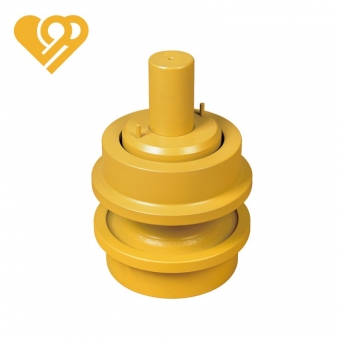
For example, the manufacturing of an excavator bottom track roller may involve material preparation, welding or friction welding, heat treatment, machining, assembly, and final inspection. Each stage has different quality requirements, so a supplier should be able to explain which checks are performed at the relevant stages.
Yintparts identifies CNC machining centers, automated welding equipment, and heat treatment facilities among its manufacturing resources. Buyers can review the company's manufacturing facilities and inspection equipment when assessing its production capabilities.
A factory photograph or equipment list is useful background information, but it is not a substitute for product-specific inspection records. Buyers should distinguish between evidence that a supplier has manufacturing capabilities and evidence that a particular order has passed its required quality checks.
Welding Inspection and Non-Destructive Testing Documents
Some excavator parts contain welded structures or welded connections. In these cases, buyers may need additional records to verify weld quality and identify defects that cannot be confirmed through dimensional inspection alone.
Depending on the product design and purchase specification, relevant documents may include:
- Welding procedure information: Describes the approved welding process and relevant parameters.
- Welder qualification records: Required when specified by the applicable quality or contract requirements.
- Visual weld inspection reports: Record checks for visible cracks, porosity, undercut, and other surface indications.
- Magnetic particle testing reports: May be used to identify surface and near-surface discontinuities in suitable ferromagnetic materials.
- Ultrasonic testing reports: May be required to examine internal discontinuities in suitable weld configurations.
- Weld repair records: Document corrective work when a weld does not initially meet the acceptance criteria.
Not every excavator spare part needs non-destructive testing. The inspection method should be selected according to the component structure, welding design, risk level, and applicable technical requirements. Buyers should clarify the required inspection method and acceptance criteria before production instead of requesting unnecessary testing for every component.
Final Inspection Reports and Pre-Shipment Quality Documents
Before an order is shipped, buyers should request a final inspection report or other agreed quality release documents. These records provide an overview of whether the finished goods have passed the required checks.
For excavator and bulldozer undercarriage parts, the final inspection may cover:
- Product name, part number, and quantity.
- Machine model or application reference.
- Dimensional inspection results.
- Hardness and other specified test results.
- Surface condition and visible defects.
- Assembly condition, where applicable.
- Product identification and marking.
- Inspection status and release approval.
Packaging and shipping records are also worth reviewing, particularly for international orders. Undercarriage components are often heavy and may be exposed to moisture, impact, or handling damage during transportation.
Buyers can request packing lists, product photographs before loading, packaging details, and shipment identification records. These documents help confirm that the correct products and quantities are prepared for delivery.
Yintparts describes quality control from raw material sourcing through machining and final packing. Its service information also identifies quality inspection and reports as part of its sales service. Buyers should confirm the specific documents, inspection scope, and reporting format available for each order before production is completed.
How to Check Whether a Supplier's Quality Documents Are Reliable
Receiving several certificates and reports does not automatically mean that the supplier has provided sufficient quality evidence. Buyers should check whether the documents are genuine, current, complete, and relevant to the products being purchased.
Use the following questions when reviewing a supplier's documentation:
- Does the company name match? Check whether the company identified in the certificate or report is the actual supplier or manufacturer.
- Is the certificate valid? Review its issue date, expiration date, certification body, and scope.
- Does the report identify the correct product? Check the part number, machine model, drawing reference, and production batch.
- Are actual test results included? Look for measured values rather than general statements such as "passed inspection."
- Are the acceptance criteria clear? Compare the test results with the agreed specification or drawing.
- Can the records be traced? Check whether material, production, and final inspection records can be linked to the same order or batch.
- Are deviations explained? If a result does not meet the requirement, request the supplier's corrective action and final disposition.
One common mistake is accepting a general company certificate as proof that every product meets the purchase specification. Company certifications, material certificates, and product inspection reports serve different purposes. A complete quality verification process should use the appropriate documents together.
What Documents Should Buyers Request for Different Excavator Parts?
Not every excavator component requires the same inspection documents. The required evidence depends on its material, structure, manufacturing process, and operating function. The following table provides a practical reference for common undercarriage parts.
| Product | Important quality documents |
|---|---|
| Track rollers | Material certificate, dimensional inspection report, hardness test report, heat treatment records, seal or assembly inspection where specified. |
| Track chains and links | Material certificate, pitch and dimensional inspection, hardness report, heat treatment records, and assembly inspection. |
| Sprockets and segments | Material certificate, tooth profile and dimensional inspection, hardness report, and heat treatment records. |
| Front idlers | Material certificate, dimensional report, hardness report, and assembly inspection where applicable. |
| Track shoes | Material certificate, width and hole-position inspection, thickness measurement, hardness report, and welding inspection where applicable. |
| Bucket teeth and adapters | Material certificate, dimensional inspection, hardness report, heat treatment records, and visual inspection. |
This is a general purchasing reference, not a mandatory universal document list. Buyers should adjust the inspection requirements according to the product drawing, technical specification, purchase contract, and intended working conditions.
How Yintparts Supports Quality Verification for Excavator Spare Parts
Xiamen Yintai Machinery Co., Ltd. (Yintparts) is a manufacturer and supplier of excavator and bulldozer spare parts. Its product range includes track chains, track shoes, bottom rollers, carrier rollers, front idlers, sprockets, bucket teeth, blades, and other undercarriage and ground engaging components.
The company states that its manufacturing and quality management processes cover raw material sourcing, production, machining, heat treatment, and final packing. Its published company information also presents factory facilities, inspection equipment, certificates, and packaging information.
Yintparts offers customized manufacturing according to customer samples, designs, and technical drawings. Its pre-sales and sales services include OEM part number guidance, technical inquiries, customized solution support, and quality inspection and reporting services. The company also describes a one-year quality warranty and technical support as part of its after-sales service.
For buyers evaluating a potential order, the most effective approach is to provide the machine brand, model, part number, required quantity, and available technical drawings. The supplier can then clarify product specifications and the inspection documents that can be provided for the selected components.
Before mass production, buyers should agree on the required material grade, critical dimensions, hardness range, applicable testing methods, sampling requirements, and final inspection documents. This makes quality expectations clear to both parties and reduces the possibility of disagreements after delivery.
To learn more about the company's products, manufacturing facilities, and quality-related services, visit Yintparts' excavator spare parts services or contact the team with your specific purchasing requirements.
Frequently Asked Questions
What documents should an excavator parts supplier provide for quality verification?
A supplier should provide relevant company certifications, material certificates, dimensional inspection reports, hardness test reports, heat treatment records, and final inspection documents. Welding and non-destructive testing reports may also be required for applicable products.
Is an ISO 9001 certificate enough to prove excavator parts quality?
No. ISO 9001 demonstrates that an organization operates a quality management system within its certified scope. It does not prove that every individual product meets its technical specifications. Buyers should also review product-specific material, dimensional, hardness, and final inspection records.
What should be included in an excavator parts material certificate?
A material certificate should identify the material grade, relevant chemical composition, material batch or heat number, applicable standard, and mechanical properties where required. Buyers should also check whether the certificate can be traced to the supplied production batch.
Why should buyers request dimensional inspection reports?
Dimensional inspection reports show whether actual product measurements meet the approved drawings and tolerances. They help buyers verify installation compatibility and identify dimensional deviations before the parts are shipped.
What is the difference between a hardness report and a heat treatment record?
A hardness report records the measured hardness of a component using a specified testing method and scale. A heat treatment record documents relevant processing information. Both provide different types of quality evidence and may be needed together when required by the product specification.
Should buyers request quality inspection reports before shipment?
Yes. Buyers should agree on the required final inspection documents before production and request the relevant reports before shipment. These records help confirm product identity, quantity, dimensional compliance, specified test results, and final inspection status.
Can Yintparts provide customized excavator parts and quality inspection support?
Yintparts offers customized excavator and bulldozer spare parts according to customer samples, designs, and technical drawings. Its published services include quality inspection and reporting support. Buyers should confirm the specific inspection records and documentation available for their products and orders.