Choosing an excavator undercarriage parts manufacturer is not just about comparing prices or checking a product catalog. Buyers also need to know whether the supplier has real manufacturing capabilities, suitable production equipment, consistent quality controls, and the ability to deliver parts that match the required machine models and technical specifications.
When an overseas factory visit is not practical, a remote audit can help buyers evaluate a manufacturer before placing an order. By combining live video calls, factory photos, production records, inspection reports, and technical discussions, buyers can build a clearer picture of how the supplier actually operates.
So, how do you audit an excavator undercarriage parts manufacturer remotely? The key is to verify what the manufacturer does, how it controls production, and whether the evidence provided is consistent with the products you intend to purchase.
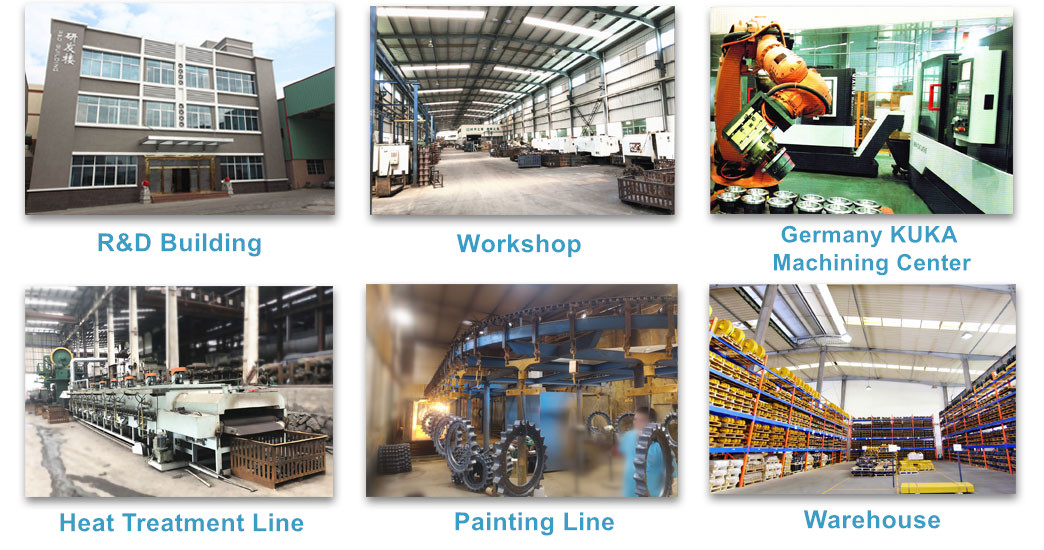
Start by Verifying the Manufacturer's Business Identity
The first step in a remote factory audit is to confirm that the supplier is a legitimate business with a clear manufacturing background. A professional website is useful, but it should not be the only source of information.
Buyers should check the following details:
- Registered company name and business address.
- How long the company has been involved in excavator and bulldozer parts.
- Whether it manufactures products directly or mainly purchases from other factories.
- Its main product categories and target machinery brands.
- Whether the company can provide a live factory tour and communicate with technical staff.
It is also worth checking whether the supplier's business profile matches its product range. A manufacturer specializing in undercarriage components should be able to explain the differences between track rollers, carrier rollers, front idlers, sprockets, track links, and track shoes.
For example, Yintparts' company background introduces Xiamen Yintai Machinery Co., Ltd. as a manufacturer involved in the research, development, production, and supply of construction machinery parts. Its product range covers major excavator and bulldozer undercarriage components, including parts suitable for Caterpillar, Komatsu, Hitachi, Daewoo, and Volvo machines.
Request a Live Video Tour of the Factory
A live video tour is one of the most useful steps when auditing an excavator parts manufacturer remotely. Pre-selected factory photos can show the general appearance of a facility, but a real-time video call allows buyers to ask questions and request specific views.
Instead of asking the supplier to show only the office or reception area, request a tour of the actual production and inspection areas.
During the video call, pay attention to:
- Production workshops: Are there identifiable machining, welding, forging, or heat treatment areas relevant to the products being purchased?
- Production equipment: Does the machinery appear suitable for manufacturing the specified undercarriage components?
- Work in progress: Can the supplier show components at different production stages?
- Inspection areas: Are measuring instruments and testing equipment available?
- Finished goods and storage: Are products stored and identified in an organized way?
A useful question is: "Can you show us the production process for the exact part we are considering?" This is more meaningful than simply asking whether the factory has advanced equipment.

Yintparts presents factory facilities and inspection equipment on its company website. Buyers can use these details as a starting point for a more specific remote discussion about the production and inspection capabilities relevant to their orders.
Check Whether the Production Equipment Matches the Products
Not every machine shop is suitable for manufacturing every type of excavator undercarriage component. Buyers should evaluate equipment according to the parts they plan to purchase rather than relying on general claims such as "advanced production lines" or "modern machinery."
For example, manufacturing track rollers may involve machining, welding or friction welding, heat treatment, and dimensional inspection. Track links and sprocket segments require suitable forging, machining, and heat treatment capabilities. Track shoes have different material, forming, welding, and inspection requirements depending on their design.
Ask the manufacturer to explain which equipment is used for each important production stage. If possible, request a live demonstration or a short video showing the relevant machine operating.
Yintparts' published manufacturing information describes the use of CNC equipment, Germany KUKA machining centers, automatic welding robots, forging lines, and automatic belt heat treatment lines. These are relevant capabilities to discuss when evaluating its manufacturing process for different undercarriage components.
For buyers sourcing excavator track rollers, it is particularly useful to ask how machining accuracy, welding quality, and heat treatment are controlled. The equipment list should be connected to actual production requirements, not treated as proof of quality by itself.
Review the Quality Control Process from Raw Materials to Finished Parts
A reliable excavator undercarriage parts manufacturer should be able to explain how quality is controlled throughout production. A final inspection alone may not identify every problem that can develop during material preparation, machining, welding, or heat treatment.
Buyers should ask how the manufacturer manages the following stages:
- Raw material inspection: How are steel grades, material specifications, and incoming materials checked?
- Machining inspection: How are key dimensions, tolerances, and assembly features measured?
- Welding and forming checks: How are relevant process parameters and finished joints inspected?
- Heat treatment control: How are hardness requirements and treatment consistency verified?
- Final inspection: How are appearance, dimensions, assembly condition, and order specifications checked before shipment?
The exact inspection requirements depend on the component. For example, front idler assemblies may require dimensional and assembly checks, while track rollers need attention to machining accuracy, hardness, and sealing or assembly condition where applicable.
A useful remote audit should not stop at asking whether the factory has a quality control department. Ask for examples of actual inspection records and have the supplier explain what each measurement means.
Ask for Inspection Reports and Supporting Quality Documents
Documents provide another way to verify whether the manufacturer's quality management process is organized and traceable. Buyers do not need to request every possible certificate for every order. Instead, the documents should match the product, technical requirements, and purchase agreement.
Depending on the component and order specifications, useful documents may include:
- Material certificates: Information about the steel grade and relevant material properties.
- Dimensional inspection reports: Actual measured values compared with drawing dimensions and tolerances.
- Hardness test reports: Test results for specified areas of the component.
- Heat treatment records: Relevant process information when heat treatment is a critical requirement.
- Welding inspection records: Applicable inspection results for welded components.
- Final inspection reports: Confirmation that the finished parts have been checked against the agreed requirements.
When reviewing a report, check whether it identifies the product, part number, inspection date, batch or production lot, test method, actual results, and acceptance criteria. A report containing only the words "Passed" or "Qualified" offers limited information if the buyer cannot identify which product or batch it refers to.
Buyers can also compare the report with the product drawing, purchase order, and sample photos. If the dimensions or material requirements do not match, ask the supplier to clarify the difference before approving production.
For components such as excavator track link groups, this comparison is particularly important because the assembly contains multiple connected components, and compatibility depends on the specified design and dimensions.
Evaluate the Manufacturer's Experience with Your Specific Parts
A supplier may have many years of experience in construction machinery parts, but buyers should still confirm whether it has experience with the exact components and machine models required for the project.
Ask questions such as:
- Which excavator or bulldozer models are these parts designed for?
- Can the manufacturer confirm the OEM part number or technical drawing?
- Has it produced similar components before?
- Can it manufacture according to a sample, drawing, or agreed specification?
- What information is needed to confirm compatibility before production?
For example, a track shoe should not be selected based only on its overall appearance. Width, thickness, bolt hole position, grouser design, and machine compatibility may all affect whether it is suitable for the application.

Yintparts supplies a range of excavator and bulldozer components and states that it can manufacture products according to customer samples, designs, or technical drawings. Buyers can review its track shoe assembly range and discuss machine model, part number, dimensions, and application requirements before confirming an order.
Check How the Manufacturer Handles Nonconforming Products
One important part of a remote audit is understanding what happens when a product fails an inspection. No manufacturing process should be evaluated only by its ability to produce acceptable parts. Buyers should also understand how the supplier identifies, separates, and handles nonconforming products.
Ask the manufacturer:
- How are defective or out-of-tolerance parts identified?
- Are nonconforming products separated from approved inventory?
- Who decides whether a product can be reworked or must be rejected?
- Are inspection results recorded after corrective action?
- How are repeated quality problems investigated and prevented?
A clear answer should describe an actual process, not just promise that "all products are guaranteed." Buyers can also ask for an example of how a previous quality issue was handled, with confidential customer information removed if necessary.
This discussion helps reveal whether quality control is part of the manufacturer's daily production management or simply a statement used in sales communication.
Verify Certificates Without Overlooking Their Scope
Certifications can support a manufacturer's credibility, but buyers should understand what each certificate actually covers. For example, ISO 9001 relates to a quality management system. It does not automatically mean that every excavator part has been independently tested or certified to a specific product standard.
During a remote audit, check:
- The company name shown on the certificate.
- The certificate number and validity period.
- The issuing certification body.
- The scope of certification and whether it relates to the supplier's actual business activities.
- Whether the certificate can be independently verified with the issuing organization.
Yintparts provides information about its ISO 9001 quality management system, including its stated controls from raw material purchasing and product development through manufacturing and final packaging.
For a buyer, the next step is to connect the management system with product-level evidence, such as material certificates, dimensional inspection reports, and hardness test results. Both types of information are useful, but they serve different purposes.
Inspect Packaging, Storage, and Shipment Preparation
Production quality is only part of the supplier evaluation. Parts can also be damaged, mixed up, or exposed to unsuitable storage conditions before they reach the buyer.
Ask the manufacturer to show how finished products are handled after final inspection. Check whether products are identified by part number or order, whether different specifications are stored separately, and whether suitable protection is used for transportation.
For heavy undercarriage components, buyers should pay attention to:
- Rust prevention and surface protection.
- Protection of machined surfaces and sealing areas.
- Product identification and quantity verification.
- Suitable packing materials and secure loading.
- Clear shipping marks and order documentation.
Request photos or a live video of the actual order being prepared when possible. This helps confirm that the products shown during the audit are connected to the order being shipped, rather than unrelated sample parts.

Use a Remote Audit Checklist Before Approving a Supplier
A checklist makes it easier to compare different excavator undercarriage parts manufacturers using the same evaluation criteria. It also helps buyers identify missing information before placing an order.
| Audit Area | What to Verify | Suggested Evidence |
|---|---|---|
| Business identity | Company background and manufacturing role | Business details and live discussion |
| Factory facilities | Production areas and equipment | Live video and workshop photos |
| Production capability | Processes suitable for the required parts | Equipment list and process demonstration |
| Quality control | Material, machining, heat treatment, and final checks | Inspection procedures and reports |
| Technical capability | Compatibility with machine models and specifications | Drawings, samples, and part number confirmation |
| Quality documentation | Traceability and inspection records | Certificates and batch-related reports |
| Packing and delivery | Product protection and order identification | Packing photos and shipping records |
| Problem handling | Nonconforming product procedures | Corrective action examples |
A manufacturer does not need to provide every possible document for every component. The important point is whether the evidence is relevant, consistent, and sufficient for the product specifications and risks involved.
Why Consider Yintparts for Excavator Undercarriage Parts?
For buyers sourcing excavator and bulldozer undercarriage components, Yintparts offers a product range that includes track chains, track shoes, track rollers, carrier rollers, front idlers, sprockets, and other machinery parts.
Xiamen Yintai Machinery Co., Ltd. is based in Xiamen, China. The company describes its business as covering research and development, manufacturing, and supply of construction machinery parts. Its website also presents factory information, inspection equipment, manufacturing capabilities, and quality management details.
These details give buyers a starting point for evaluating whether the supplier's capabilities match their purchasing requirements. Before confirming an order, buyers should still provide the exact machine model, OEM part number, drawing or sample, required material, and inspection criteria so that the product specifications and quality checks can be discussed clearly.
For additional information about product selection, customization, and quality-related support, buyers can visit Yintparts' service information or contact the company directly.
Frequently Asked Questions About Remote Manufacturer Audits
Can buyers audit an excavator undercarriage parts manufacturer without visiting the factory?
Yes. Buyers can conduct an initial remote audit through live video tours, equipment demonstrations, production records, inspection reports, business documents, and technical discussions. A remote audit cannot replace every aspect of an on-site inspection, but it can help identify major risks before an order is placed.
What should I ask during a remote factory video call?
Ask the supplier to show the production workshop, equipment used for your specific parts, inspection area, work in progress, finished products, and packing area. Request explanations of the manufacturing and quality control processes rather than relying only on a general factory introduction.
How can I tell whether an excavator parts supplier is a real manufacturer?
Check its company background, factory address, production equipment, manufacturing processes, and ability to explain technical details. A live video tour showing relevant production activities is useful. Buyers should also compare the information with business documents and actual inspection records.
Does an ISO 9001 certificate guarantee the quality of excavator undercarriage parts?
No. ISO 9001 indicates that a quality management system is in place within the stated certification scope. It does not independently guarantee the quality of every product. Buyers should also review product-specific material, dimensional, hardness, and final inspection records as required by the order.
What documents should I request before placing an order?
Depending on the product and purchase specifications, buyers may request material certificates, dimensional inspection reports, hardness test reports, relevant heat treatment records, final inspection reports, and product identification or batch information. The required documents should be agreed upon before production.
What information should I provide when asking a manufacturer to verify an undercarriage part?
Provide the machine brand and model, OEM part number, product name, drawing or sample, required quantity, material requirements, and any important dimensions or inspection standards. This helps the manufacturer confirm compatibility and clarify the production and inspection requirements.
Is a remote audit enough to approve a new excavator parts supplier?
A remote audit is a useful screening and evaluation method, but it should be combined with product samples, agreed inspection criteria, and appropriate pre-shipment checks. For high-value or critical orders, buyers may also consider an independent third-party inspection before shipment.