You need replacement excavator undercarriage parts when you spot visible wear or your measurements pass manufacturer limits. Picture this: you climb into the cab, and your excavator's undercarriage sags on one side. A roller drips oil onto the ground. The sprocket teeth look sharp and hooked. These are classic excavator undercarriage problems, and they signal that your undercarriage parts need replacing soon.
Catching these signs early saves money. A worn track chain often lasts 4,000 to 6,000 hours under moderate conditions with proper maintenance. Once track pitch elongation passes 2%, you must replace the chain or it will damage the sprocket. Early detection prevents costly downtime, secondary damage, and larger repair bills on your excavator undercarriage.
Key Takeaways
-
Watch for wear signs like sagging tracks, oil leaks, and sharp sprocket teeth to catch problems early.
-
Measure track pitch elongation; if it passes 2%, replace the chain to avoid sprocket damage.
-
Inspect undercarriage parts every 250 hours and after working in tough conditions.
-
Replace parts when they reach wear limits, and match wear stages for even load distribution.
-
Keep tracks properly tensioned and clean daily to extend part life and reduce downtime.
Signs Your Excavator Undercarriage Parts Need Replacing
Spotting Wear on Your Undercarriage Parts
You can often spot wear on your undercarriage parts before a gauge confirms it. Walk around the machine and look for sagging tracks, broken or missing track shoes, and oil weeping from roller or idler end caps. Wet residue, fresh drips, or thick rings of caked dirt around a seal gap all point to a failed seal. Once that seal fails, oil escapes and internal bushings run dry. Dry rollers generate intense friction heat and can seize under load.
Check the sprocket next. Healthy teeth have a rounded profile. Sharp, hooked, or shark-fin edges mean the teeth have lost their shape. This condition signals that the sprocket and chain no longer engage correctly, and it raises the risk of chain slippage while speeding up wear on your track links.
Listen during travel, too. Grinding or scraping noises often mean worn track rollers or carrier rollers with failing bearings. Clicking or knocking sounds synchronized with track rotation suggest loose pins or bushings. Squealing may indicate dry idler bearings. Metallic rattling at start and stop usually comes from excessive track slack. These wear symptoms in excavator tracks almost always appear long before major component failure.
Track, Roller, Idler, and Sprocket Wear
Operating clues matter as much as visual ones. Slipping tracks, poor straight-line travel, sluggish turning, and excessive play in the track chain all point to worn or damaged undercarriage components. Frequent derailment is a critical warning sign that affects machine mobility. If your excavator tracks are worn out, you may also notice reduced performance and higher fuel consumption.
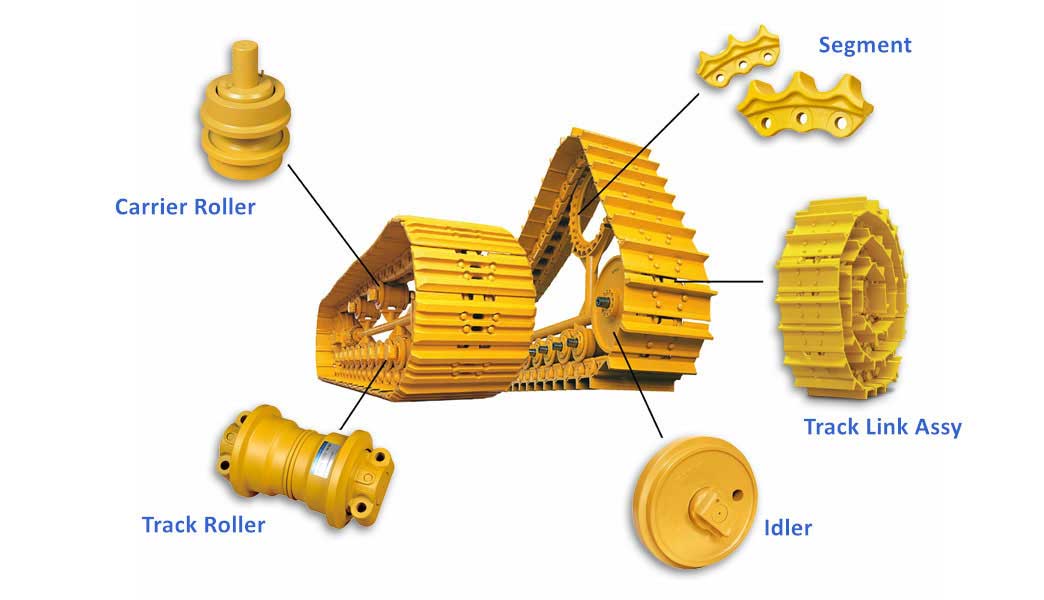
Component-specific signs help you narrow down the cause. Track links show a decreasing link height and bushing diameter, and the track stops running synchronously with the sprocket. Rollers and idlers develop flat spots, thinner flanges, and wobble. Idler surfaces may show grooving where the chain rides, resembling a vinyl record. Tension devices leak grease, so the chain can no longer hold proper tension.
Vibration tells its own story. Flat-spotted rollers produce a repetitive thumping that matches travel speed. Pin galling creates stiff, jerky chain movement and increased rolling resistance. Sprocket tooth wear causes clunking during direction changes and chain slipping under load. As components wear unevenly, load distribution across the system becomes unstable, and the vibration worsens as wear progresses.
Track cracks typically begin appearing after 3,000 to 4,000 operating hours under average conditions, though abrasive environments can shorten that window. Any unusual noise or vibration warrants immediate investigation, because small problems escalate quickly into expensive failures. When you catch these excavator undercarriage problems early, you avoid secondary damage and keep repair costs down. If rubber pads show cracks or missing chunks, those rubber pads need replacing before they damage the chain. Document every symptom you find, and compare it against the manufacturer's limits before you decide that undercarriage parts need replacing.
How to Inspect Excavator Undercarriage Parts
Start your inspection with a clean machine. Dirt and grease hide early wear, so wash the undercarriage before you begin. Park on stable, level ground with the bucket and blade down, the engine off, and the safety lockout engaged. Lift the track off the surface so weight is removed and sag can be measured accurately. This step also makes idler movement safer.
Work through the components one side at a time. Check track chains, sprockets, idlers, and rollers in sequence from the sprocket to the front idler. Compare both tracks side by side for uneven wear before you take detailed measurements. Look for loose parts, structural damage, and missing hardware. Inspect sprocket teeth for sharp or worn edges. Check roller surfaces for flat spots and look underneath for wetness that signals leaking seals. Examine the front idler for visible damage and signs of leakage.
Operating tests confirm what your eyes find. Run the machine in forward and reverse on flat ground. Smooth travel and correct track alignment indicate healthy components. Deviation suggests wear. Listen while the machine operates for abnormal noises or vibrations that point to mechanical issues. If the machine drifts or tracks unevenly, you may have worn excavator undercarriage parts, track tension issues, or travel-motor problems. These symptoms are common excavator undercarriage problems that require professional diagnosis.
Measuring Track Pitch and Sag
Accurate track wear measurement requires the right tools and reference points. Use the table below to guide your work.
|
Tool / Reference Point |
Purpose |
|---|---|
|
Track measuring group |
Dealer-standard kit for grouser height, rail height, link height, roller and idler tread diameter, and bushing diameter |
|
Outside caliper / wear gauge |
Precise diameter and thickness measurements against OEM specs |
|
Depth gauge |
Grouser height and tread-depth-from-center measurements |
|
Tape measure |
Pitch elongation measurement across a 4-pin span |
|
Straightedge / string line |
Track tension (sag) measurement from sprocket to idler over grouser tips |
|
Track spade |
Cleaning packed dirt from rollers, sprockets, and idlers |
|
OEM spec sheet |
Wear-limit chart to convert measurements to percentage wear |
Roll the machine forward and coast to a stop. Center a track pin over the carrier roller. Lay a straightedge or string over grouser tips from the sprocket to the idler. Measure from the line down to the grouser tips at the lowest sag point. For mid-sized excavators, typical sag runs 1 to 2 inches (25 to 50 mm).
Track pitch elongation is the critical measurement. Once elongation passes 2%, you must replace the chain or it will damage the sprocket. Measure across a 4-pin span with a tape measure to detect pin and bushing wear. Use calipers on pins and bushings, and compare readings with OEM limits. If the upper half of the bushing shows wear, bushing turning is needed. Severe bushing wear beyond OEM limits means you should schedule replacement before catastrophic failure.
Finally, check the track adjuster for grease or oil leaks. Fresh, wet-looking grease around the exposed piston shaft indicates the main seal has failed. Dirt stuck to fresh grease creates a patch of grime that looks different from dry dust elsewhere. Grease seeping from the grease valve means the fitting may be damaged and cannot hold pressure. A track link can no longer be tensioned properly when the adjuster leaks, and the leak lets water and grit score the cylinder wall.
Lifting the track off the surface provides a more accurate sag measurement and safer idler movement.
Repair or Replace Undercarriage Parts?
Wear Limits and Replacement Timing
You can repair a single worn item on a low-hour machine. On a machine under 3,000 hours, isolated damage is more common, and single-part replacement may suffice. Once several components sit within 20 to 30 percent of their manufacturer tolerance, a full set replacement is the better call. At that point, individual fixes rarely pay off.
Use the thresholds below to judge when components require replacement.
|
Component |
Replacement Indicator |
|---|---|
|
Track chains |
Pitch elongation of 1% to 2% |
|
Track rollers |
75% or more of service life used |
|
Sprockets |
Tooth height wear beyond 50% of original height |
|
Idlers |
Flange wear below the manufacturer's limit |
A leaking roller or idler is a firm replacement signal. A non-rotating roller drags and destroys the track. When you replace excavator undercarriage parts, match the wear stage across the set. If you replace one bottom roller, replace all bottom rollers on that side for uniform load distribution.
Costs, Downtime, and Residual Value
Compare the full cost picture before you repair or replace the undercarriage. Parts price is only one line. Add labor, machine downtime, and the residual value of the worn component. Bushings can be turned to use their remaining surface, and rollers can be resurfaced. If repair cost exceeds 60–65% of a new part, replacement is more profitable.
Downtime often decides the question. A stalled excavator can cost $800–$1,500 per day. If the machine bills $1,200 per day and the repair-versus-replace gap is €800, a preventive swap during a scheduled stop avoids a larger loss. Aftermarket parts can run 20%–50% cheaper, and professionally rebuilt components deliver 40%–60% savings when sourced from established rebuilders with warranties.
When replacement is necessary, a comprehensive supplier like Yintai covers the full system: track chains, track shoes, track rollers, carrier rollers, idlers, sprockets, recoil springs, bucket teeth and adapters, and blades. These undercarriage parts for excavators fit Caterpillar, Komatsu, Hitachi, Daewoo, and Volvo machines, with custom options and strict quality control from raw steel to packing.
Preventive Maintenance That Slows Undercarriage Wear
Tension, Alignment, and Lubrication Checks
Correct track tension protects your excavator undercarriage more than any other single habit. Over-tight tracks increase friction between the chain and rollers, which accelerates wear on carrier rollers, chain links, and seals. Loose tracks invite derailment during turns or heavy loads, and they let the chain slip off the sprocket. For mid-size excavators, aim for 1 to 2 inches of sag. Pump grease through the adjuster fitting, travel the machine back and forth, and re-measure until you reach specification. If the track will not hold tension, suspect leaking piston seals and stop pumping.
|
Tension Condition |
Result |
|---|---|
|
Too tight |
Accelerated wear on rollers, links, and seals |
|
Too loose |
Derailment risk and poor sprocket engagement |
Lubrication deserves the same discipline. Grease track rollers weekly in normal conditions and daily in mud or water. Pump until fresh grease appears at the seal, then stop when you feel back pressure. For oil-bath rollers, check oil weekly; normal consumption runs 5 to 10 percent between services, and anything above 15 percent points to seal trouble. Inspect seal zones for wet residue or dirt rings, because failed seals leave bearings dry and can seize a roller.
Careful Operation and Daily Cleaning
Your operating habits shape how fast components wear. High-speed tracking raises track temperatures and shortens track life, so travel slowly and steadily. Alternate passes on side hills and work downhill when you can, since side-hill operation overworks links on one side. Reserve reverse travel for positioning, because reverse motion wears bushings and sprockets faster. Minimize sharp turns and counter-rotations, and alternate turning directions to spread the load.
Cleaning takes about ten minutes at the end of each shift. Pressure wash packed mud, rocks, and debris from the undercarriage before it hardens overnight. This simple routine removes abrasive material, reduces friction, and keeps your visual inspections accurate. Skipping it allows premature wear that can cut equipment life in half. Schedule deeper maintenance every 250 to 1,000 operating hours, depending on conditions. These steps turn avoidable excavator undercarriage problems into routine upkeep and delay the day you need replacement parts.
You need replacement excavator undercarriage parts when wear signs appear, measurements exceed limits, or parts can no longer work safely and cost-effectively. Watch the 2% track pitch rule closely. Leaking rollers, idlers, or sprockets with hooked teeth demand immediate attention. These excavator undercarriage problems rarely fix themselves.
Regular inspections and preventive maintenance extend component life and cut total ownership costs. Track your measurements, schedule an undercarriage inspection, and replace excavator undercarriage parts before unexpected downtime strikes. Your excavator undercarriage rewards consistent care with longer service life and fewer surprises.
FAQ
How often should I inspect my excavator undercarriage?
Inspect it every 250 operating hours under normal conditions. Check more often in mud, rock, or abrasive ground. A quick daily walk-around also helps. Look for leaks, loose shoes, and sagging tracks before each shift.
Can I replace just one worn roller or sprocket?
You can replace a single part on a low-hour machine. Once several components sit within 20 to 30 percent of their tolerance, replace the full set. Match the wear stage across the undercarriage for even load distribution.
Do aftermarket undercarriage parts fit my machine?
Yes. Quality aftermarket parts fit Caterpillar, Komatsu, Hitachi, Daewoo, and Volvo machines. Yintai supplies track chains, shoes, rollers, carrier rollers, idlers, sprockets, recoil springs, bucket teeth and adapters, and blades with OEM-compatible fits and custom options.
What happens if I delay replacement?
A worn track chain with pitch elongation past 2% damages the sprocket. A leaking roller seizes and drags the chain. A non-rotating roller destroys the track. Delayed replacement raises repair costs and causes unexpected downtime.
How long do excavator undercarriage parts last?
Track chains often last 4,000 to 6,000 hours under moderate conditions with proper maintenance. Abrasive environments shorten that window. Track cracks typically appear after 3,000 to 4,000 hours. Regular inspections and correct tension extend component life.